
Introduction
Inflammation is a natural process that helps the body protect itself from infections, injuries, and other harmful substances. It is an essential part of the immune system and plays an important role in healing damaged tissues. When you cut your finger, develop a sore throat, or twist your ankle, inflammation helps your body respond to the problem and begin the recovery process.
However, inflammation is not always beneficial. While short-term inflammation is necessary for healing, inflammation that persists for months or years can contribute to several health problems. Chronic inflammation has been associated with conditions such as cardiovascular disease, type 2 diabetes, arthritis, and certain other long-term illnesses.
Understanding inflammation can help you recognize its signs, identify possible triggers, and make lifestyle choices that support your overall health.
In this article, we will explain what inflammation is, why it occurs, how it affects different parts of the body, the difference between acute and chronic inflammation, and the lifestyle habits that can help support a healthy inflammatory response.
What Is Inflammation?
Inflammation is the body’s biological response to injury, infection, irritation, or other harmful stimuli. It involves the immune system, blood vessels, and various signaling molecules that work together to protect tissues and support healing.
When your body detects a threat, immune cells release chemical messengers that coordinate the inflammatory response. These messengers can increase blood flow to the affected area and make blood vessels more permeable, allowing immune cells and proteins to reach the damaged tissue.
This process helps the body remove harmful microorganisms, clear damaged cells, and begin tissue repair.
For example, if bacteria enter your body through a small cut, the immune system activates an inflammatory response to help control the infection. As the threat is addressed, the response normally decreases, allowing the tissue to recover.
Inflammation is therefore not automatically a sign of disease. It is a necessary defense mechanism.
Problems may arise when inflammation becomes excessive, damages healthy tissue, or continues even after the original trigger has disappeared.
What Are the Main Signs of Inflammation?
Inflammation can produce several noticeable signs, although the symptoms depend on the cause, severity, and location.
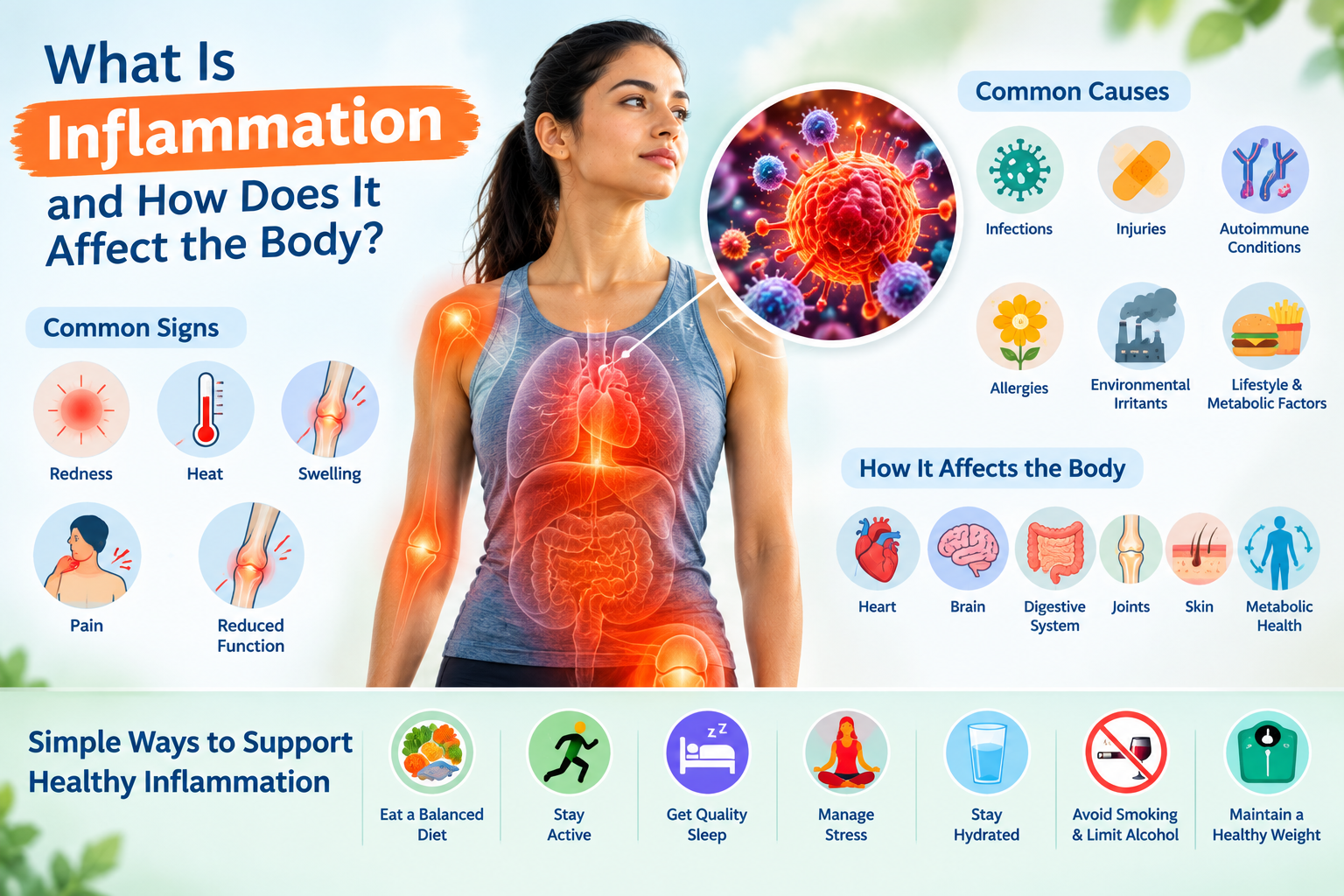
The five classic signs of inflammation are redness, heat, swelling, pain, and reduced function.
1. Redness
Inflamed skin or tissue may appear red because blood vessels widen and more blood flows into the affected area.
For example, a minor cut may become red around its edges as the immune system responds to the injury.
Redness can be part of normal healing, but spreading redness, increasing pain, or other signs of infection may require medical assessment.
2. Heat
The affected area may feel warmer than the surrounding tissue because increased blood flow brings more warmth to the site.
This is common after a minor injury, insect bite, or localized skin inflammation.
However, a hot, swollen, painful joint or rapidly worsening skin inflammation should not automatically be dismissed as normal healing.
3. Swelling
Inflammation can cause fluid and immune-related substances to accumulate in the affected tissues.
This may produce visible swelling, such as a swollen ankle after a sprain or puffiness around an irritated area of skin.
Swelling can also occur internally and may not always be visible from outside the body.
4. Pain or Tenderness
Inflammatory chemicals can stimulate nerve endings and make the affected area more sensitive.
Pain encourages you to protect an injured part of your body while healing takes place.
The intensity of the pain varies depending on the underlying cause. Persistent or severe pain may indicate a problem that requires professional evaluation.
5. Reduced Function
Inflammation may interfere with normal movement or activity.
For example, a swollen knee may make walking difficult, while inflammation in the throat can make swallowing uncomfortable.
Reduced function often improves as the underlying problem resolves, but ongoing symptoms should be evaluated.
Other Possible Symptoms
When inflammation affects the body more broadly, symptoms may include:
- Fatigue or low energy.
- Fever.
- General aches and discomfort.
- Loss of appetite.
- Muscle or joint pain.
- Feeling unwell.
These symptoms are not specific to inflammation and can occur in many other conditions. Their significance depends on the overall clinical picture.
What Causes Inflammation?
Inflammation can develop for many reasons. The immune system responds differently depending on the type of threat and the tissues involved.
1. Infections
Bacteria, viruses, fungi, and certain parasites can trigger inflammation.
When the immune system detects an infectious organism, it activates defensive responses to control the infection and limit its spread.
For example, inflammation can contribute to redness around an infected wound, swelling during some respiratory infections, or pain in an inflamed throat.
Infections may require specific treatment, such as antibiotics for certain bacterial infections or antiviral medication in selected situations. Lifestyle changes alone are not a substitute for appropriate treatment.
2. Physical Injuries
Cuts, burns, sprains, and other injuries can damage tissues and activate the inflammatory response.
Inflammation helps remove damaged cells and prepares the area for repair.
For instance, after a muscle strain, inflammatory processes contribute to the initial pain and swelling associated with the injury.
Although some inflammation is necessary for healing, severe injuries may require medical attention.
3. Autoimmune Conditions
An autoimmune disease develops when the immune system mistakenly attacks the body’s own tissues.
This can cause inflammation in particular organs or across multiple body systems.
Examples include rheumatoid arthritis, lupus, and certain inflammatory bowel diseases.
The resulting inflammation may persist or return repeatedly, potentially causing tissue damage without appropriate management.
Treatment depends on the specific condition and may involve medications that regulate immune activity.
4. Allergies
Allergic reactions occur when the immune system responds excessively to a substance that is usually harmless to most people.
Common allergens include pollen, dust mites, certain foods, and animal dander.
Allergic inflammation may cause sneezing, itchy eyes, skin rashes, nasal congestion, or breathing difficulties.
Severe allergic reactions can be life-threatening and require emergency treatment.
5. Environmental Irritants
Exposure to cigarette smoke, air pollution, certain chemicals, and other irritants can contribute to inflammation in the respiratory system and other tissues.
The effects depend on the substance, the amount of exposure, and the duration of contact.
Reducing avoidable exposure to harmful irritants can support respiratory and general health.
6. Lifestyle and Metabolic Factors
Certain lifestyle patterns can contribute to long-term metabolic changes associated with chronic inflammation.
These may include physical inactivity, smoking, poor sleep, and dietary patterns that regularly provide excessive calories or large amounts of highly processed foods.
Excess body fat, particularly visceral fat around internal organs, can also release inflammatory signaling molecules.
These factors do not affect everyone in the same way, and chronic inflammation cannot always be explained by lifestyle alone.
Genetics, aging, infections, medical conditions, and environmental influences may also play important roles.
Acute Inflammation vs. Chronic Inflammation
Inflammation is generally discussed in two broad categories: acute inflammation and chronic inflammation.
Understanding the difference is important because these processes have different causes, durations, and health implications.
What Is Acute Inflammation?
Acute inflammation begins relatively quickly in response to a trigger, such as an injury or infection.
It often lasts from a short period to several days, although the duration depends on the cause and severity.
During acute inflammation, blood flow increases and immune cells move toward the affected area.
Common examples include:
- Redness around a small cut.
- Swelling after an ankle sprain.
- A sore throat during an infection.
- Localized inflammation after a minor burn.
Acute inflammation is usually a helpful response that supports the body’s defense and repair processes.
Once the threat is controlled and healing progresses, the inflammatory response normally subsides.
However, severe acute inflammation can be dangerous. Some infections and other medical emergencies require immediate treatment.
What Is Chronic Inflammation?
Chronic inflammation occurs when the inflammatory response persists or repeatedly becomes activated over an extended period.
It may develop because the original trigger remains present, the immune system does not regulate the response properly, or an underlying condition continuously activates inflammatory pathways.
Unlike acute inflammation, chronic inflammation may not produce obvious redness, swelling, or pain.
Possible contributors include autoimmune diseases, persistent infections, prolonged exposure to irritants, and certain metabolic conditions.
Chronic inflammation can damage tissues over time and contribute to the development or progression of various diseases.
However, not every chronic illness is caused by inflammation, and not all inflammation produces long-term harm. The effects depend on the underlying condition and the tissues involved.
How Does Inflammation Affect Different Parts of the Body?
Inflammation can affect almost any tissue. Its effects depend on where it occurs, how intense it becomes, and how long it lasts.
1. Inflammation and the Heart
Chronic inflammatory processes are involved in the development of atherosclerosis, a condition in which fatty deposits accumulate in artery walls.
Inflammation contributes to the formation and progression of these plaques. If a plaque becomes unstable and ruptures, a blood clot may form and block blood flow, potentially causing a heart attack or stroke.
Cardiovascular disease is influenced by multiple factors, including blood pressure, cholesterol, smoking, diabetes, genetics, and physical activity.
A heart-healthy lifestyle can help reduce overall cardiovascular risk, but inflammation should not be considered the only cause of heart disease.
2. Inflammation and the Brain
Inflammatory processes are involved in several neurological conditions and may influence brain function.
Inflammation can occur in response to infections, autoimmune disorders, injuries, and other medical problems affecting the nervous system.
Researchers are also studying how inflammatory pathways interact with neurodegenerative conditions.
However, the relationship between inflammation and brain health is complex. It would be inaccurate to assume that every case of fatigue, forgetfulness, or difficulty concentrating is caused by chronic inflammation.
Persistent neurological symptoms should be assessed by a qualified healthcare professional.
3. Inflammation and the Digestive System
Inflammation can affect the digestive tract in several ways.
Conditions such as Crohn’s disease and ulcerative colitis involve chronic inflammation of the gastrointestinal tract.
Possible symptoms include abdominal pain, diarrhea, fatigue, and unintended weight loss.
Other digestive conditions can also produce discomfort without being primarily inflammatory diseases.
A balanced diet can support digestive health, but persistent abdominal pain, blood in the stool, or ongoing changes in bowel habits require medical evaluation.
4. Inflammation and the Joints
Inflammation plays an important role in many joint conditions.
Rheumatoid arthritis is an autoimmune disease that causes inflammation in the lining of joints. Over time, it can damage cartilage, bone, and surrounding tissues.
Osteoarthritis, which involves changes in joint structures, can also include inflammatory processes, although it differs from rheumatoid arthritis.
Symptoms may include pain, swelling, stiffness, and reduced mobility.
Treatment depends on the cause and may include medication, physical therapy, exercise, and other measures recommended by a healthcare professional.
5. Inflammation and the Skin
The skin frequently displays visible signs of inflammation.
Conditions such as eczema, psoriasis, contact dermatitis, and certain forms of acne involve inflammatory processes.
Symptoms may include redness, itching, dryness, swelling, scaling, or discomfort.
Skin inflammation can be triggered by immune responses, allergens, irritants, infections, and genetic factors.
Appropriate skin care and medical treatment can help manage many inflammatory skin conditions.
Avoid assuming that every rash is caused by an allergy or that every skin problem will resolve with home remedies.
6. Inflammation and Metabolic Health
Chronic, low-grade inflammation is associated with obesity, insulin resistance, and type 2 diabetes.
Inflammatory signaling from certain tissues, including excess visceral fat, may interfere with the body’s response to insulin.
This can contribute to difficulties regulating blood glucose.
The relationship works in multiple directions: metabolic problems can promote inflammation, and inflammatory processes can worsen metabolic function.
Maintaining physical activity, eating a balanced diet, getting adequate sleep, and managing blood glucose when necessary can support metabolic health.
How Can You Support a Healthy Inflammatory Response Naturally?
Although inflammation is essential for healing, maintaining overall health can help reduce certain avoidable contributors to chronic inflammation.
No single food, supplement, or lifestyle habit can eliminate all inflammation. The most useful approach involves consistent habits that support the immune system and general well-being.
1. Eat a Balanced, Nutrient-Rich Diet
A varied diet provides vitamins, minerals, fiber, healthy fats, and other nutrients that support normal body functions.
Consider including the following foods regularly:
- Fruits such as berries, oranges, apples, and guava.
- Vegetables such as spinach, broccoli, carrots, and tomatoes.
- Whole grains such as oats, brown rice, and whole-wheat products.
- Legumes such as beans, lentils, and chickpeas.
- Nuts and seeds.
- Fish rich in omega-3 fatty acids.
- Suitable sources of protein, including eggs, tofu, yogurt, and lean meat.
Fruits and vegetables contain vitamins and other plant compounds that support overall health.
Foods such as oily fish, walnuts, and flaxseeds provide omega-3 fatty acids, which are involved in normal inflammatory regulation.
You do not need to follow an expensive diet or eliminate entire food groups to support health.
A Mediterranean-style eating pattern, which emphasizes vegetables, fruits, legumes, whole grains, nuts, and unsaturated fats, is one well-studied option associated with cardiovascular benefits.
2. Limit Excessive Consumption of Highly Processed Foods
Highly processed foods vary widely in their nutritional content. Some are convenient and nutritious, while others contain substantial amounts of added sugar, sodium, and saturated fat.
Frequently consuming energy-dense foods while eating too few fiber-rich plant foods may contribute to poor metabolic health in some people.
Practical steps include:
- Reducing sugary drinks.
- Eating more vegetables and whole fruits.
- Choosing whole grains more often.
- Limiting excessive intake of foods high in added sugar.
- Preparing balanced meals at home when practical.
The aim is not to label every processed food as harmful. Instead, focus on the overall quality of your diet.
3. Exercise Regularly
Physical activity supports cardiovascular fitness, insulin sensitivity, muscle strength, and healthy body composition.
Regular exercise may also help regulate certain inflammatory processes.
Adults are generally advised to aim for at least 150 minutes of moderate-intensity aerobic activity each week, along with muscle-strengthening activities on at least two days.
Examples include brisk walking, cycling, swimming, dancing, and strength training.
If you are new to exercise, begin with manageable sessions and gradually increase your activity.
Avoid pushing through severe pain, fever, or unexplained symptoms. Rest and seek medical advice when appropriate.
4. Get Enough Quality Sleep
Sleep supports immune regulation, tissue repair, and metabolic function.
Regular sleep deprivation can disrupt several biological processes and is associated with changes in inflammatory markers.
Most adults benefit from approximately seven to nine hours of sleep each night.
To improve sleep quality:
- Maintain a consistent bedtime.
- Wake up at approximately the same time each day.
- Keep your bedroom comfortable and quiet.
- Limit caffeine later in the day.
- Reduce stimulating activities close to bedtime.
- Seek medical advice for persistent insomnia or possible sleep apnea.
Good sleep is an important part of overall health, although it cannot replace treatment for an inflammatory disease.
5. Manage Stress Effectively
Long-term stress can influence the immune system, sleep, appetite, and other processes involved in health.
Relaxation techniques may help reduce stress and support healthy routines.
Consider practicing meditation, gentle yoga, deep breathing, journaling, or spending time outdoors.
Talking with supportive friends and family members can also help.
If stress becomes overwhelming or begins to interfere with everyday life, consider seeking professional support.
Stress management is not a cure for chronic inflammation, but it can be a valuable part of a broader health plan.
6. Avoid Smoking and Limit Alcohol
Smoking exposes the body to harmful chemicals that can damage tissues and contribute to inflammatory processes.
Quitting smoking can improve cardiovascular, respiratory, and general health.
Alcohol can also have harmful effects when consumed excessively. Heavy alcohol use may contribute to inflammation and damage the liver and other organs.
Avoid smoking and seek support if you want to quit. If you drink alcohol, reducing or avoiding it can help protect your health.
7. Maintain a Healthy Weight When Appropriate
Excess visceral fat can release inflammatory signaling substances and is associated with metabolic problems.
For people with overweight or obesity, gradual weight loss may improve certain inflammatory and metabolic markers.
However, weight management should be approached individually. People of different body sizes can experience inflammatory diseases, and weight loss is not an appropriate treatment for every person.
Focus on sustainable habits, including balanced meals, regular movement, and adequate sleep.
A healthcare professional or registered dietitian can help you establish realistic goals suited to your circumstances.
Can Supplements Reduce Inflammation?
Supplements containing omega-3 fatty acids, curcumin, and other ingredients are sometimes promoted for their potential anti-inflammatory effects.
However, evidence varies by supplement, dosage, medical condition, and individual circumstances.
A supplement that influences an inflammatory marker in a research study does not necessarily prevent disease or improve symptoms for everyone.
Some products may also cause side effects or interact with prescribed medications.
For example, concentrated supplements can have different effects from consuming the same ingredient in ordinary food.
Before taking an anti-inflammatory supplement, discuss it with a healthcare professional, especially if you take medication, have a chronic condition, are pregnant, or are preparing for surgery.
Do not replace prescribed treatment for arthritis, autoimmune disease, or another inflammatory condition with supplements unless your treating clinician advises an appropriate change.
When Should You Seek Medical Advice?
Some inflammation is a normal part of healing, but certain symptoms need medical assessment.
Consult a healthcare professional if you experience persistent swelling, unexplained pain, recurring fever, prolonged digestive problems, or ongoing fatigue accompanied by other concerning symptoms.
Seek prompt medical assessment for a joint that becomes suddenly hot, swollen, and severely painful, particularly if you also have a fever.
Get urgent medical help if you develop severe difficulty breathing, swelling of the tongue or throat, chest pain, sudden neurological symptoms, or other signs of a medical emergency.
These symptoms may have serious causes and should not be managed through lifestyle changes alone.
If you have an established inflammatory condition, follow your treatment plan and attend recommended medical appointments.
Frequently Asked Questions (FAQs)
1. What is inflammation in simple terms?
Inflammation is the body’s protective response to injury, infection, or irritation. It helps defend tissues and supports healing.
2. What are the five main signs of inflammation?
The five classic signs are redness, heat, swelling, pain, and reduced function in the affected area.
3. Is inflammation always harmful?
No. Acute inflammation helps the body respond to injury and infection. Persistent or excessive inflammation, however, can damage tissues.
4. What is the difference between acute and chronic inflammation?
Acute inflammation develops quickly and usually resolves as healing progresses. Chronic inflammation persists or repeatedly occurs over a longer period.
5. Can diet influence inflammation?
Yes. A balanced diet rich in vegetables, fruits, whole grains, legumes, and healthy fats supports overall health and may improve certain inflammatory markers.
6. Does exercise help reduce chronic inflammation?
Regular physical activity supports metabolic health and may help regulate inflammation. The benefits depend on individual health and exercise habits.
7. Can stress cause inflammation?
Chronic stress can influence immune and hormonal processes associated with inflammation, although the relationship is complex and varies between individuals.
8. Which foods are associated with anti-inflammatory eating patterns?
Vegetables, fruits, whole grains, legumes, nuts, seeds, and oily fish are common components of healthy dietary patterns associated with better overall health.
9. Can chronic inflammation cause fatigue?
Some inflammatory conditions cause fatigue, but tiredness has many possible causes. Persistent fatigue should be evaluated when appropriate.
10. Can inflammation be cured naturally?
Some temporary inflammation resolves naturally as healing progresses. Chronic inflammatory diseases may require medical treatment alongside supportive lifestyle changes.
Conclusion
Inflammation is an essential part of the body’s defense and repair systems. It helps fight infections, respond to injuries, and begin the healing process. Without inflammation, the body would struggle to protect itself and recover from damage.
However, inflammation that persists for too long or becomes excessive can contribute to tissue damage and is associated with several chronic health conditions.
Understanding the difference between helpful acute inflammation and potentially harmful chronic inflammation can help you make better decisions about your health.
A balanced diet, regular physical activity, quality sleep, effective stress management, and avoiding smoking can support overall well-being and help reduce certain risk factors associated with chronic inflammation.
Remember that inflammation has many possible causes, and lifestyle changes cannot replace appropriate medical treatment. If you experience persistent, severe, or unexplained symptoms, consult a qualified healthcare professional.
By developing sustainable healthy habits and seeking medical care when necessary, you can support your body’s natural healing processes and protect your long-term health.