
There is a moment in nearly every weight loss journey when the scale stops moving. The diet is unchanged. The exercise continues. The effort is the same. Yet the number stares back, unmoved, as if mocking the very idea of progress.
This is the weight loss plateau. And it is not a sign that you have failed. It is a sign that your body is doing exactly what evolution designed it to do: protect you from what it perceives as starvation.
Understanding why plateaus happen—and what they truly mean for your health—can transform frustration into patience, and patience into lasting success.
What a Weight Loss Plateau Actually Is
A weight loss plateau is a period when your weight stops changing despite continuing the diet and exercise habits that previously produced results . It is not the same as daily fluctuations, which are normal and expected. True plateaus last for weeks or even months.
Dr. Shirisha Avadhanula, an endocrinologist at Cleveland Clinic, explains it simply: “Weight loss is hard, and every pound lost should be celebrated.” Plateaus, she notes, “happen because of something our bodies do, but it’s through no fault of our own” .
The timing varies. Some people hit their first plateau within 12 weeks. For others, it arrives around six months . A meta-analysis of eight weight loss strategies—including diet alone, exercise alone, meal replacements, and medications—found that weight loss typically plateaus around six months after intervention initiation, regardless of the method used .
Why Your Body Fights Back
The plateau is not a malfunction. It is a survival mechanism, honed over millennia when food scarcity was the norm and weight loss was dangerous.
The Metabolic Set Point
Your body has what Dr. Avadhanula calls a “metabolic set point”—a weight it considers ideal, determined by genetics, current weight, and activity level . When you lose weight, your body perceives this as a threat. It responds by producing regulatory hormones that increase hunger and make you feel less full, hoping to drive you back to that set point .
This is not a lack of willpower. It is biology. Weight regain is “a biologically defended survival mechanism rather than a failure of patient willpower” .
The Efficiency Trap
Exercise, paradoxically, becomes less effective over time. “As you exercise, your body becomes more efficient at conserving energy,” Dr. Avadhanula explains. If you burned 300 calories during a workout at the beginning, your body adapts. “Instead of burning 300 calories in half an hour, for example, you might only burn 200” .
The same principle applies to daily movement. When you first start a new activity, you waste energy through inefficient movement. As you become skilled, your body performs the same tasks with less energy expenditure. This is called exercise economy, and it contributes to the plateau .
The Hormonal Cascade
Weight loss triggers a cascade of hormonal changes designed to restore lost fat:
- Leptin decreases: Leptin, produced by fat cells, signals satiety. As fat mass shrinks, leptin levels fall, increasing hunger .
- Ghrelin increases: The “hunger hormone” rises during weight loss, stimulating appetite .
- Peptide YY decreases: This hormone promotes fullness, but its levels drop during weight loss, reducing satiety .
- GLP-1 may decline: This incretin hormone regulates appetite; reduced levels can increase hunger .
These hormonal shifts are not minor. They create a powerful biological drive to eat more and move less—the exact opposite of what weight loss requires.
The Glycogen Illusion
The rapid weight loss in the first weeks is partly an illusion. When you cut calories, your body releases glycogen stores—carbohydrates stored in muscles and liver. Glycogen is bound to water. When it burns for energy, water is released, and weight drops. But this effect is temporary .
Once glycogen stores stabilize, the scale reflects true fat loss, which is slower and less dramatic. This shift can feel like a plateau even when fat is still being lost .
The Honest Truth About Calories and Adaptation
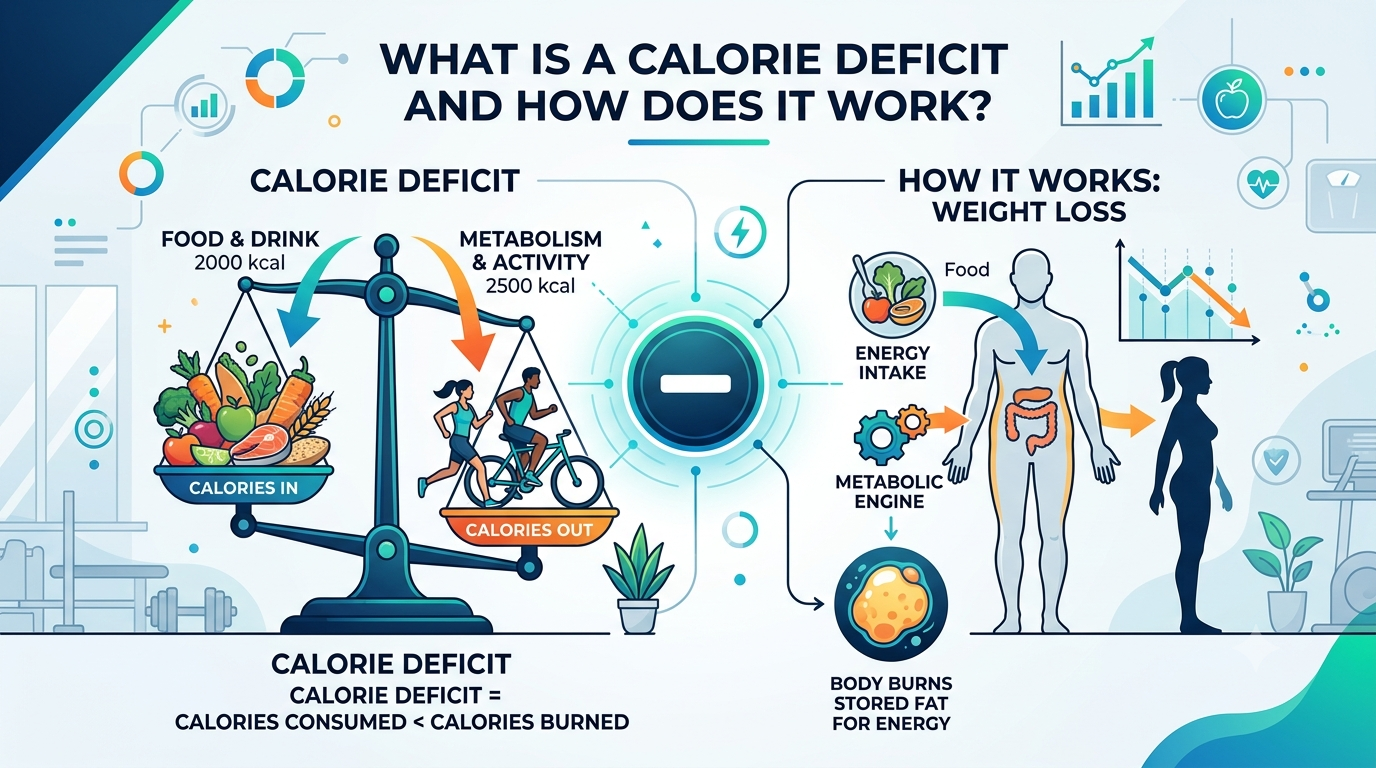
The “calories in, calories out” model is not wrong, but it is incomplete. It assumes a static system. The human body is dynamic.
When you reduce calorie intake, your body does not simply burn stored fat at a constant rate. It adapts. Resting energy expenditure declines. Non-exercise activity thermogenesis—the calories burned through fidgeting, standing, and daily tasks—may drop unconsciously . You move less without realizing it.
This is why the same diet that worked at the beginning stops working. You are not eating more. Your body is simply burning less .
The “False Plateau”: When the Scale Lies
Not every stall is a true plateau. Daily weight fluctuations of up to 2 kilograms are common, caused by bladder volume, food in the digestive tract, and shifts in extracellular fluid . For women, the menstrual cycle can cause water retention that masks fat loss, with weight typically increasing before menstruation .
To track accurately, weigh yourself daily in the morning, after using the bathroom, before eating or drinking, and while unclothed. Record each measurement. Look at trends over weeks, not days .
If your weight has not changed for one month or longer, you have likely reached a true plateau .
Table 1: True Plateau vs. Normal Fluctuation
| Characteristic | True Weight Loss Plateau | Normal Fluctuation |
|---|---|---|
| Duration | 1 month or longer | Days to 1–2 weeks |
| Pattern | Consistent, no downward trend | Up and down, with overall trend |
| Cause | Metabolic adaptation, hormonal shifts | Water, food, hormones, sodium |
| Response | Adjust diet/exercise; be patient | Continue current plan; do not panic |
What a Plateau Really Means for Your Health
Here is the perspective that changes everything: a plateau is not failure. It is often a sign of success.
If you have lost weight and your body has stabilized, it means you have found a new equilibrium. Your body has adapted to a lower weight. It is no longer fighting as hard. This is the point where weight maintenance begins—and maintenance is the true measure of long-term success.
Research from CSIRO, Australia’s national science agency, analyzed data from over 6,500 people and found that weight loss is not linear. Most successful losers experienced plateaus along the way. Two in three lost at least 5% of their body weight by 12 months; one in three lost at least 10%. The most common patterns included at least one three-month plateau .
Dr. Gilly Hendrie, lead researcher, put it plainly: “The reality is weight loss isn’t linear. Periods of maintenance and small regains are normal—but with persistence, meaningful results can happen” .
The CSIRO study identified three common plateau patterns, all of which led to significant weight loss over a year :
Table 2: Common Weight Loss Patterns That Include Plateaus
| Pattern | Description | Average Weight Loss at 12 Months |
|---|---|---|
| 6 + 6 | Loss for 6 months, then maintenance for 6 months | 11 kg (12% of starting weight) |
| 3 + 9 | Loss for 3 months, then maintenance for 9 months | 5 kg (nearly 6% of starting weight) |
| 9 + 3 | Loss for 9 months, then maintenance for 3 months | 16 kg (17% of starting weight) |
These are not failures. These are the shapes of real success.
When the Plateau Is Not Just Adaptation
Sometimes a plateau signals something else. Health conditions can mimic or contribute to weight loss stalls:
- Hypothyroidism: An underactive thyroid slows metabolism .
- PCOS (Polycystic Ovary Syndrome): Hormonal imbalances can make weight loss more difficult.
- Medications: Some antidepressants, antipsychotics, and steroids promote weight gain or impede loss .
- Sleep apnea: Poor sleep disrupts appetite hormones and energy levels .
If you have been diligent and the plateau persists for more than four to six weeks, it may be worth discussing with a healthcare provider. Metabolic testing—measuring resting metabolic rate (RMR) or using DEXA scans for body composition—can reveal what is happening beneath the surface .
What to Do: Strategies That Work
If you want to continue losing weight after a plateau, you need to create a new energy deficit. The old one no longer exists. Here are evidence-based approaches.
Reassess, Do Not Assume
Research suggests that “off-and-on loosening of rules” contributes to plateaus . Track everything you consume for one to two weeks—including drinks, snacks, cooking oils, and sauces. “Calories can slowly creep up when you become too comfortable with your daily routine,” says dietitian Karissa Valles .
Look at your food and activity records honestly. Have portions grown? Are you snacking more? Has exercise intensity declined?
Adjust Calories—Gently
If you decide to cut calories further, do not go below 1,200 calories per day unless supervised by a healthcare provider. Fewer than 1,200 calories may not provide enough nutrition and can increase constant hunger, raising the risk of overeating .
Prioritize Protein
Protein is your ally. It preserves lean muscle mass and promotes satiety. Recommendations during weight loss suggest 1.2 to 1.5 grams of protein per kilogram of body weight per day . One small European study found that a diet with 25% of calories from protein led to a higher resting energy expenditure .
Increase Physical Activity—Strategically
The American Heart Association and American College of Cardiology recommend at least 200 minutes per week of moderate-intensity physical activity for sustained weight loss, combining aerobic exercise and resistance training .
But intensity and variety matter. If you have been doing the same workout for months, your body has adapted. Change your routine every four to six weeks to challenge different muscles and prevent efficiency from taking over . High-intensity interval training, new classes, or adding resistance can reignite progress.
Build Muscle
Muscle burns more calories at rest than fat. Resistance training two to four days per week helps preserve and build muscle, which supports metabolism and long-term weight management . This is one of the most effective strategies for breaking a plateau .
Increase NEAT
Non-exercise activity thermogenesis—the calories you burn through daily movement—is often underestimated. “The amount of energy you expend walking up the stairs, tapping your foot, cleaning, standing at your workstation, etc., are all activities that add up,” says Valles . Increase your step count. Take the stairs. Stand while working. These small changes accumulate.
Sleep and Stress
Poor sleep and chronic stress raise cortisol, which promotes belly fat storage and can drive stress-related eating . Aim for seven to nine hours of quality sleep each night. Practice stress management through meditation, deep breathing, or regular physical activity .
A Note on GLP-1 Medications
For those using GLP-1 receptor agonists like semaglutide or tirzepatide, plateaus are also common. Weight loss with these medications typically plateaus around one year after starting treatment—significantly later than with lifestyle intervention alone, but still a natural part of the process .
Plateaus on GLP-1 medications do not mean the medication has stopped working. They may reflect the body adjusting to a lower weight. However, research shows that these medications may attenuate metabolic adaptation by preserving metabolic efficiency and shifting substrate utilization toward greater fat oxidation .
If you are taking a GLP-1 medication and hit a plateau, discuss it with your provider. Do not adjust your dose on your own .
Frequently Asked Questions
Is a weight loss plateau normal?
Yes. Being stuck at a weight-loss plateau “eventually happens to everyone who tries to lose weight” . It is a normal physiological response, not a personal failure.
How long do plateaus last?
They can last weeks to months. The duration varies by individual and depends on how you respond. Multiple plateaus may occur during long-term weight loss, with each one lasting longer than the previous .
Does a plateau mean my metabolism is damaged?
No. Your metabolism is not “damaged.” It has adapted to a lower body weight, which requires fewer calories to maintain. This is a normal and expected response .
Should I eat less to break a plateau?
You can cut calories, but do not go below 1,200 per day without medical supervision. Instead of drastic cuts, consider increasing physical activity or adjusting macronutrient distribution. Food restriction alone is often insufficient .
Can a plateau be a good thing?
Yes. A plateau often means you have reached a stable, maintainable weight. Maintenance is the ultimate goal of any weight loss journey. If you are satisfied with your current weight, a plateau is a success, not a setback .
When should I see a doctor?
If your plateau lasts more than four to six weeks despite adherence, or if you experience extreme fatigue, hair loss, weakness, or unexpected weight gain, consult a healthcare provider . They can check for thyroid issues, hormonal imbalances, or other medical causes.
Helpful Websites and Resources
- Mayo Clinic – Getting Past a Weight-Loss Plateau: Practical, evidence-based strategies for overcoming stalls. (mayoclinic.org)
- Cleveland Clinic – How to Break a Weight-Loss Plateau: Clear explanations of why plateaus happen and what to do. (health.clevelandclinic.org)
- National Institutes of Health (NIH) – Management of Weight Loss Plateau: Clinical guidance on metabolic adaptation and strategies. (ncbi.nlm.nih.gov)
- CSIRO – Weight Loss Research: Data on real-world weight loss patterns and the myth of linear progress. (csiro.au)
- Banner Health – Overcoming Weight-Loss Plateaus: Dietitian-led advice on tracking, strength training, and metabolic testing. (bannerhealth.com)
A Conclusion That Rests on Patience
The plateau is not the end of your journey. It is a bend in the road. A moment to pause, reassess, and continue with greater wisdom.
Your body is not working against you. It is working for you, in the only way it knows how—by defending the weight it has known. The task is not to fight this biology, but to work with it. To adjust gently. To move more. To sleep well. To be patient.
The CSIRO research offers the most hopeful message of all: plateaus are part of the process, not evidence of its failure. The people who succeed are not those who never plateau. They are those who plateau, persist, and keep going .
The scale will move again. Or it will not. Either way, you will have built something more valuable than a smaller number: a stronger body, better habits, and a wiser relationship with your own biology.
Imp. Note: This article is for informational purposes only and is not a substitute for professional medical advice, diagnosis, or treatment. Always seek the guidance of your physician or another qualified health provider with any questions you may have regarding a medical condition or before making changes to your diet, exercise routine, or medications. If you are taking prescription weight loss medications, do not adjust your dose without consulting your healthcare provider. If you have concerns about a weight loss plateau or your metabolic health, consult a healthcare professional for personalized assessment and guidance.