
Introduction
Gut health has become an important topic in nutrition and wellness, and two terms frequently appear in discussions about digestive health: prebiotics and probiotics. Although their names sound similar, they serve different purposes in the body. Both can support a healthy digestive system, but understanding how they work can help you make better dietary choices.
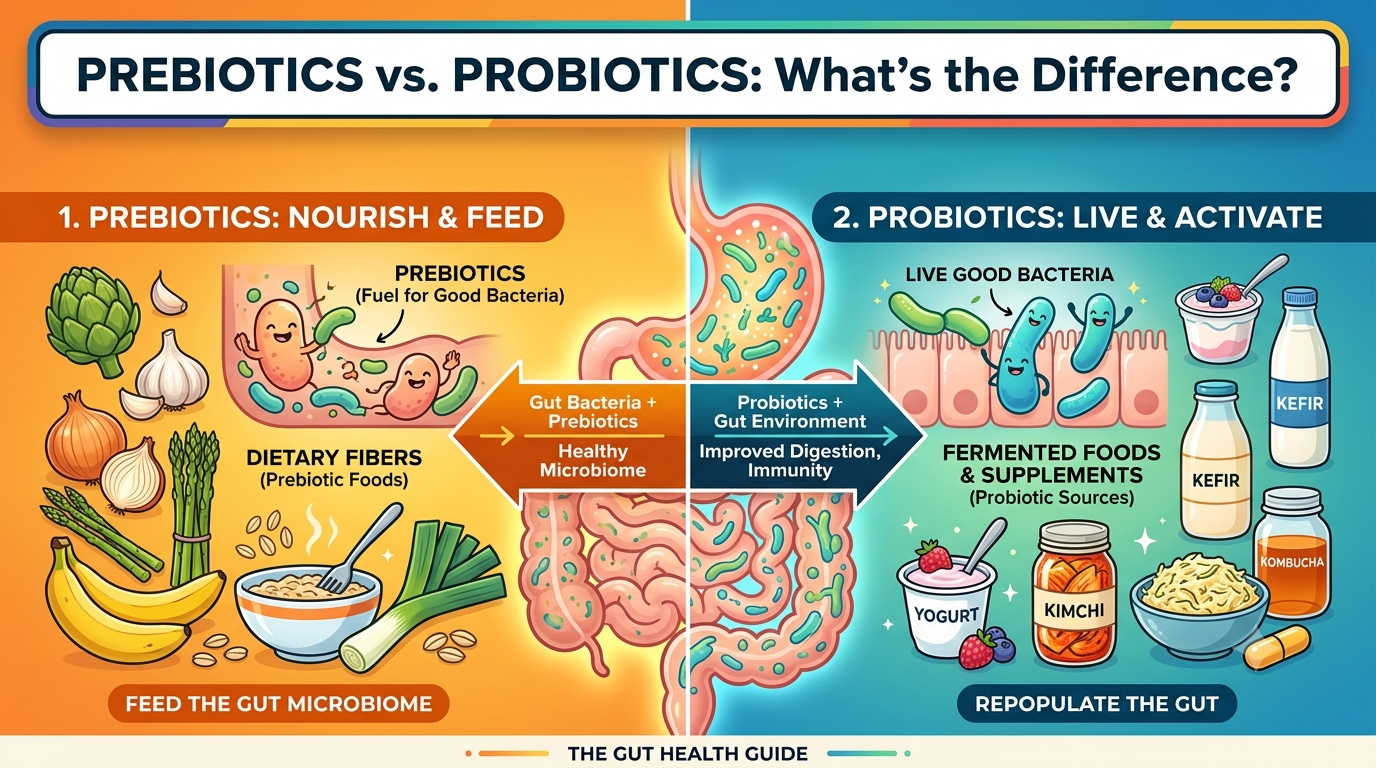
Probiotics are beneficial living microorganisms that, when consumed in adequate amounts, can provide health benefits. Prebiotics, on the other hand, are substances that certain beneficial microorganisms use as food. They help nourish selected microbes already living in the digestive tract.
Think of your gut as a garden. Probiotics are like introducing helpful plants into that garden, while prebiotics act like nourishment that helps suitable plants grow. This comparison is simplified, but it illustrates the basic difference between the two.
Both prebiotics and probiotics are associated with the gut microbiome, the community of bacteria and other microorganisms living in the digestive system. This community plays a role in digestion, immune function, and several other aspects of health.
In this article, we explore what prebiotics and probiotics are, how they work, their benefits, the foods that contain them, and how to include both in a balanced diet.
1. What Are Probiotics?
Probiotics are live microorganisms that provide a health benefit when administered in adequate amounts. They include certain bacteria and yeasts that have been studied for their effects on digestive health and other aspects of human well-being.
The digestive tract naturally contains a diverse community of microorganisms. Some probiotic microorganisms can help maintain or support this community, although their effects depend on the specific strain, dose, and individual.
Probiotics may work through several mechanisms. They can compete with potentially harmful microorganisms for nutrients and attachment sites, produce substances that influence other microbes, and interact with the body’s intestinal barrier and immune system.
However, not every microorganism is a probiotic, and not every fermented food or supplement provides the same benefits. Scientific evidence must support the particular health effect being claimed.
Common Types of Probiotics
Several groups of microorganisms are commonly used in probiotic foods and supplements.
Lactobacillus: Members of this group are found in some fermented foods and probiotic products. Certain strains have been studied for their potential benefits in conditions such as antibiotic-associated diarrhea.
Bifidobacterium: These bacteria naturally occur in the digestive tract and are frequently included in probiotic supplements. Certain strains may help with specific digestive symptoms.
Saccharomyces boulardii: This is a beneficial yeast used in some probiotic products. It has been studied for selected forms of diarrhea, although suitability depends on the person and clinical situation.
The benefits of probiotics are strain-specific. A product containing one strain may have evidence for a particular condition, while another product containing a different strain may not offer the same effect.
Therefore, choosing a probiotic should involve more than simply looking for the word “probiotic” on the packaging.
2. What Are Prebiotics?
Prebiotics are substances that are selectively used by microorganisms in the body and provide a health benefit. Many well-studied prebiotics are types of dietary fiber or related carbohydrates that the human digestive system cannot fully digest.
Instead of being broken down and absorbed in the upper digestive tract, these substances reach the large intestine, where certain microorganisms can use them.
When gut microbes ferment suitable prebiotic fibers, they may produce short-chain fatty acids, including acetate, propionate, and butyrate. These compounds play several roles in the intestinal environment and can help support the health of the gut lining.
Prebiotics are therefore important because they nourish selected microorganisms already present in the gut.
Unlike probiotics, prebiotics do not need to contain live microorganisms. They are components of food that can influence the activity and composition of the gut microbiome.
Common Types of Prebiotics
Inulin: This type of fermentable fiber occurs naturally in foods such as chicory root, onions, garlic, and asparagus. It is also added to some packaged foods.
Fructooligosaccharides (FOS): These carbohydrates are found in foods such as onions, garlic, asparagus, and some other plant foods.
Galactooligosaccharides (GOS): These substances occur in certain legumes and are also used in some specialized food products.
Resistant starch: This type of starch resists digestion in the small intestine and can be fermented by gut microorganisms. Sources include legumes, green bananas, and cooked-and-cooled potatoes or rice.
Not all dietary fibers are formally classified as prebiotics. However, many types of fiber support digestive health by improving stool consistency, increasing stool bulk, or serving as substrates for gut microbes.
Eating a variety of fiber-rich foods is generally a practical way to support a healthy digestive system.
3. Prebiotics vs. Probiotics: The Key Differences
Although both support gut health, prebiotics and probiotics work in different ways.
| Feature | Prebiotics | Probiotics |
|---|---|---|
| What they are | Substances used by selected beneficial microorganisms | Live microorganisms that provide health benefits when consumed adequately |
| Main role | Nourish selected gut microbes | Provide specific beneficial microbial effects |
| Common sources | Onions, garlic, oats, legumes, bananas | Yogurt with live cultures, certain fermented foods, supplements |
| Do they contain live microbes? | No, not by definition | Yes |
| Main consideration | Fiber type, quantity, and individual tolerance | Microbial strain, dose, quality, and evidence |
| Possible digestive effects | May increase gas or bloating, especially when increased quickly | May cause temporary digestive symptoms in some people |
| Are supplements necessary? | Usually not for people eating a varied diet | Usually not for healthy people without a specific indication |
The central difference is straightforward: prebiotics feed certain beneficial microorganisms, while probiotics are live microorganisms that may provide specific health benefits.
Neither is automatically better than the other. Their usefulness depends on dietary patterns, individual needs, and the health outcome being considered.
4. Health Benefits of Probiotics
Probiotics have been studied for a range of digestive and other health conditions. However, the evidence varies considerably between strains, products, and conditions.
Supporting Digestive Health
Certain probiotic strains may help manage specific digestive problems, including some forms of diarrhea. For example, particular strains have been studied for antibiotic-associated diarrhea.
Antibiotics can disrupt the normal gut microbiome because they affect susceptible bacteria, including some beneficial microorganisms. Certain probiotics may help reduce the risk of diarrhea in selected situations, but results are not consistent across all products or individuals.
People taking antibiotics should ask a healthcare professional whether a probiotic is appropriate, especially if they have other medical conditions.
Helping With Certain Digestive Symptoms
Some probiotic strains have been studied for symptoms such as abdominal discomfort, bloating, and irregular bowel habits.
However, probiotics do not reliably relieve every digestive complaint. The effects depend on the strain and the underlying cause of the symptoms.
People with persistent bloating, abdominal pain, diarrhea, or constipation should not assume that a probiotic alone will resolve the problem.
Supporting the Gut Barrier
The gut lining acts as a selective barrier between the contents of the digestive tract and the rest of the body.
Some probiotic microorganisms may influence the intestinal barrier and interact with immune cells. These effects are an active area of research, but they should not be interpreted as proof that all probiotic products strengthen immunity or prevent disease.
Supporting Specific Health Outcomes
Research has examined probiotics in areas such as certain infectious conditions, bowel disorders, and some metabolic outcomes. Findings differ according to the population studied and the specific microorganisms used.
For this reason, probiotic products should be selected according to a clearly defined purpose rather than broad marketing claims.
5. Health Benefits of Prebiotics
Prebiotics support gut health by providing nourishment for selected microorganisms. Their effects depend on the type of prebiotic, the amount consumed, and the person’s existing gut microbiome.
Supporting Regular Bowel Movements
Many prebiotic-containing foods are also rich in dietary fiber. Fiber can help increase stool bulk and support regular bowel movements.
Some fibers hold water in the stool, while others are fermented by gut microbes. Different fibers therefore have different effects on digestion.
Eating sufficient fiber and drinking adequate fluids can help support bowel regularity, although individual needs vary.
Encouraging Beneficial Gut Microbes
Certain prebiotics can encourage the growth or activity of selected microorganisms, including some Bifidobacterium species.
However, the microbiome is complex. A change in the abundance of one bacterial group does not automatically mean that every aspect of gut health has improved.
A varied diet containing fruits, vegetables, legumes, whole grains, nuts, and seeds can provide different types of fiber that support a diverse gut environment.
Producing Short-Chain Fatty Acids
When gut microbes ferment suitable prebiotic fibers, they can produce short-chain fatty acids.
Butyrate, for example, serves as an important energy source for cells lining the colon. Short-chain fatty acids also influence the intestinal environment and are being studied for their wider metabolic and immune effects.
Although these findings help explain why fiber is beneficial, the effects of a particular prebiotic supplement should not be exaggerated beyond the available evidence.
Supporting Overall Dietary Quality
Foods rich in prebiotic fibers often provide other valuable nutrients, including vitamins, minerals, and plant compounds.
For example, oats supply soluble fiber, beans provide fiber and protein, and vegetables contribute a range of vitamins and minerals.
Including these foods regularly can support digestive health while contributing to an overall balanced eating pattern.
6. Best Food Sources of Probiotics
Probiotic foods can be a convenient way to include certain live microorganisms in the diet.
Common examples include:
Yogurt with live cultures: Yogurt made using live bacterial cultures is a familiar source of microorganisms. Check the label if you specifically want a product containing live cultures.
Kefir: This fermented milk drink contains a mixture of microorganisms, although the exact composition varies between products.
Some fermented vegetables: Certain traditionally fermented vegetables may contain live microorganisms when they have not been pasteurized after fermentation. Not all pickled vegetables contain live cultures.
Some fermented soy foods: Certain fermented soy products may contain live microorganisms, depending on how they are manufactured and processed.
Selected probiotic supplements: Supplements may contain defined strains in measured quantities and can be useful in particular situations.
It is important to understand that fermented foods and probiotic foods are not always interchangeable terms. Some fermented foods are heated or processed in ways that kill live microorganisms.
Fermented foods can still be nutritious even when they do not provide live cultures.
For everyday eating, yogurt with live cultures can be a convenient option for people who tolerate dairy. Those avoiding dairy can explore suitable alternatives, checking whether the product actually contains live cultures.
7. Best Food Sources of Prebiotics
Prebiotics are found in a range of everyday plant foods, making them relatively easy to include in a balanced diet.
Onions and Garlic
Onions and garlic contain fermentable carbohydrates, including fructans, that can support selected gut microorganisms.
They can be added to vegetables, soups, curries, sauces, and other meals.
However, these foods may trigger symptoms in some people with irritable bowel syndrome or sensitivity to certain fermentable carbohydrates.
Bananas
Bananas provide fiber, and greener bananas generally contain more resistant starch than fully ripe bananas.
They can be eaten as a snack, added to oats, or combined with yogurt for a simple breakfast.
Oats
Oats contain beta-glucan, a soluble fiber associated with several health benefits, including helping maintain healthy cholesterol levels.
They are also a convenient source of fiber for breakfast or snacks.
Legumes
Beans, chickpeas, lentils, and peas provide fiber and plant-based protein. Some of their carbohydrates can be fermented by gut microorganisms.
Adding legumes gradually may help reduce gas and bloating as the digestive system adjusts.
Other Plant Foods
Asparagus, leeks, whole grains, nuts, seeds, and a variety of vegetables can contribute to overall fiber intake.
Rather than relying on a single so-called superfood, aim to include different plant foods throughout the week.
8. Can You Take Prebiotics and Probiotics Together?
Yes. Prebiotics and probiotics can be consumed together as part of a balanced diet.
When a product combines a probiotic microorganism with a prebiotic ingredient, it is often called a synbiotic. The intention is to combine a live microorganism with a substrate that can be used by beneficial microorganisms.
However, combining the two does not guarantee greater health benefits. The usefulness of a synbiotic depends on the specific ingredients, their quantities, and evidence supporting the combination.
You do not necessarily need a special supplement to consume both.
For example, a meal containing yogurt, oats, and banana may provide live cultures from the yogurt, fiber from the oats, and additional fiber from the banana. A separate meal with lentils, vegetables, and whole grains can provide further dietary fiber.
These foods support overall nutrition and can contribute to a healthy gut environment.
If you have a specific digestive condition or are considering supplements for a medical reason, a healthcare professional can help determine whether a particular product is appropriate.
9. Possible Side Effects and Precautions
Although many prebiotic and probiotic foods are well tolerated, they are not suitable for everyone in every situation.
Prebiotics and Digestive Discomfort
Increasing fiber intake too quickly can cause gas, bloating, abdominal discomfort, or changes in bowel movements.
People who are sensitive to fermentable carbohydrates may experience symptoms after eating foods such as onions, garlic, legumes, or certain prebiotic supplements.
A gradual increase in fiber, adequate fluid intake, and attention to individual tolerance can help.
People following a medically recommended low-FODMAP diet should work with a qualified dietitian or healthcare professional before making substantial changes.
Probiotics and Individual Tolerance
Some people experience mild digestive symptoms when beginning a probiotic supplement. These may include gas or bloating.
More importantly, probiotics are not risk-free for every person. People who are severely immunocompromised, critically ill, or have certain serious underlying medical conditions should consult a healthcare professional before taking probiotic supplements because rare infections have been reported.
Supplement quality also varies. Choose products from reputable manufacturers and follow the storage instructions, expiry date, and recommended use.
Do not use a supplement as a substitute for medical treatment or delay seeking care for persistent digestive symptoms.
Seek prompt medical advice if digestive symptoms are accompanied by blood in the stool, unexplained weight loss, severe abdominal pain, or persistent vomiting.
10. How to Improve Gut Health Naturally
A healthy gut is supported by more than a single food, microorganism, or supplement. Everyday habits and overall dietary patterns matter.
Here are practical ways to support digestive health:
- Eat a variety of plant foods. Include vegetables, fruits, legumes, whole grains, nuts, and seeds to obtain different types of fiber.
- Increase fiber gradually. Sudden changes can cause discomfort, so introduce high-fiber foods over time.
- Include suitable fermented foods. Yogurt with live cultures and other fermented foods can add variety to your diet.
- Stay adequately hydrated. Water supports normal digestion and helps fiber work effectively.
- Exercise regularly. Physical activity can support bowel function and overall health.
- Get sufficient sleep. Consistent sleep habits support general well-being and may influence the gut microbiome.
- Manage stress. Relaxation, physical activity, and healthy daily routines can help manage stress-related digestive symptoms.
- Avoid unnecessary supplements. A varied diet is a good foundation, and supplements should be chosen according to individual needs and reliable evidence.
There is no single ideal diet for every person’s microbiome. A sustainable eating pattern that provides sufficient nutrients and suits your digestive tolerance is generally more useful than following restrictive food rules.
Conclusion
Prebiotics and probiotics both play important roles in discussions about digestive health, but they work differently. Probiotics are live microorganisms that can provide specific health benefits, while prebiotics are substances that selected microorganisms use as food.
Probiotics may help with certain digestive conditions when the appropriate strains are used. Prebiotics, many of which are found in fiber-rich plant foods, can support beneficial microbial activity and normal bowel function.
The best sources of prebiotics include foods such as oats, onions, garlic, legumes, bananas, and other plant foods. Probiotic sources include yogurt with live cultures, certain fermented foods, and selected supplements.
Neither category is a universal solution for digestive problems, and more supplements do not necessarily mean better gut health.
For most people, a balanced diet with a variety of plant foods, suitable fermented foods, regular physical activity, adequate hydration, and sufficient sleep provides a sensible foundation for digestive well-being.
Understanding the difference between prebiotics and probiotics can help you make informed choices and focus on sustainable habits that support your gut health over time.