
Your gut doesn’t need a complicated protocol. It needs fiber, fermented foods, and a little patience.
Introduction: The “Second Brain” You’ve Been Ignoring
More than 100 trillion microorganisms live in your digestive tract. They aren’t parasites—they’re a symbiotic ecosystem that helps digest your food, synthesize vitamins, train your immune system, and even influence your mood and sleep through the gut-brain axis.
When this ecosystem falls out of balance, your body sends unmistakable signals: bloating, gas, constipation, diarrhea, post-meal fatigue, skin flare-ups. These symptoms are often blamed on “something you ate,” but the real cause may run deeper—your gut microbiome is asking for help.
The good news: restoring gut health doesn’t require expensive supplements or extreme diets. Experts at UCLA Health make it clear that the most effective recovery strategy is feeding your microbes with whole foods. A study published in Nature went even further, showing that a healthy diet can restore the gut microbiome more effectively than fecal transplants.
Part One: Three Truths About Gut Health
Truth #1: Diversity Matters More Than “Superfoods”
You’ve probably heard the advice to “eat yogurt for probiotics.” But a 2026 study by King’s College London and ZOE turned that idea on its head: a daily mixture containing more than 30 plants improved gut bacteria far more than a single probiotic capsule.
The numbers are striking. Participants in the plant-mixture group saw increases in 57 beneficial bacterial species, while the probiotic group changed only 4. What’s more, 55% of participants reported reduced indigestion, 37% had less bloating, and 35% reported less severe constipation.
The takeaway is clear: feeding the microbes you already have beats trying to “add” new ones with a pill.
Truth #2: Fiber Is the Main Course for Your Microbiome
Dietary fiber is the primary fuel for your gut bacteria. When they ferment fiber, they produce short-chain fatty acids—molecules that feed colon cells, maintain the gut barrier, and regulate immune responses.
Johns Hopkins Medicine notes that optimal colon function requires at least 25 grams of fiber per day. Most adults fall far short of that target.
High-fiber sources to prioritize:
- Whole grains: oats, brown rice, whole-wheat bread
- Legumes: lentils, chickpeas, black beans
- Vegetables: spinach, kale, broccoli
- Fruits: raspberries (8 grams per cup), bananas, kiwi
Truth #3: Fermented Foods Offer a “Living” Boost
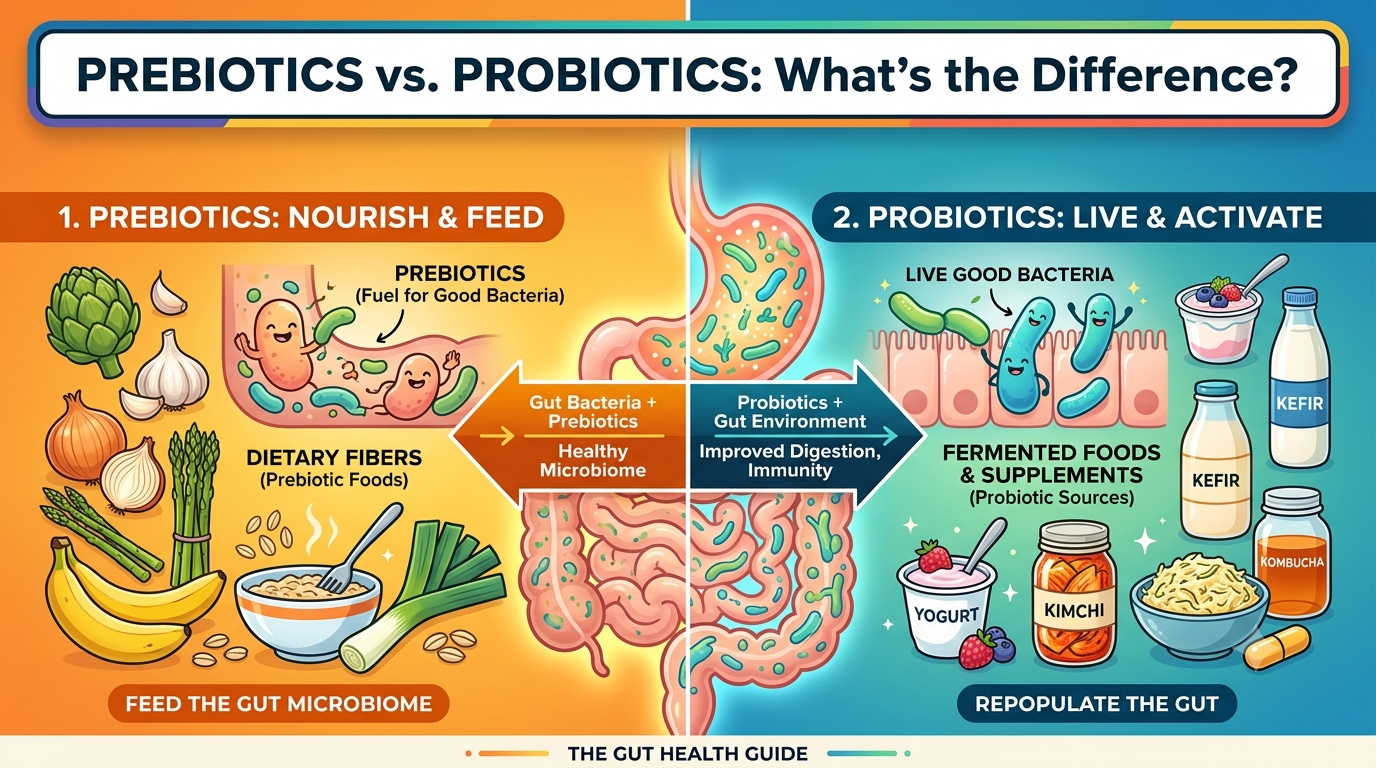
Fermented foods deliver both probiotics (live beneficial bacteria) and prebiotics (fuel for those bacteria). Harvard Health points out that while single-strain supplements may help some people, fermented foods provide a broader mix of strains and metabolic byproducts.
Fermented foods worth adding to your plate:
| Food | What It Offers | How to Use It |
|---|---|---|
| Yogurt | The most familiar probiotic source | Choose “live and active cultures,” unsweetened |
| Kefir | A yogurt-like fermented drink with richer strains | Drink plain or blend into smoothies |
| Kimchi | Korean fermented vegetables with lactic acid bacteria | Serve as a side or add to sandwiches |
| Miso | Fermented soybean seasoning | Use in soups or marinades |
| Tempeh | Fermented soybean cake with a firm texture | Pan-fry and add to salads or wraps |
Part Two: Five Simple Habits You Can Start Today
Habit #1: Add One Plant to Every Meal
You don’t need to overhaul your entire diet overnight. Start by adding one plant to each meal: a spoonful of chia seeds in your morning oats, a handful of spinach in your lunch sandwich, roasted broccoli tossed into your dinner pasta.
ZOE’s research shows that plant diversity is the single most important factor shaping your gut microbiome. The goal is 30 different plants per week—including vegetables, fruits, nuts, seeds, herbs, and spices.
Habit #2: Increase Fiber Slowly, Not Suddenly
If your current fiber intake is low, a sudden jump will cause bloating and gas. Harvard Health recommends letting your digestive system adapt gradually—about a week for your body to adjust.
A practical ramp-up:
- Week 1: Add one whole grain serving daily (swap white rice for brown rice)
- Week 2: Add one legume serving daily (half a cup of lentils into soup or salad)
- Drink more water alongside—fiber needs fluid to move smoothly through the gut
Habit #3: Make Fermented Foods a Daily Habit, Not a “Special Fix”
Don’t wait until your gut feels off to eat yogurt. Weave fermented foods into your regular routine:
- Use plain yogurt instead of mayo in dressings
- Stir a spoonful of kefir into your morning oatmeal
- Serve kimchi alongside grilled meat
- Use miso as a soup base or marinade
Habit #4: Protect Your Gut Barrier
The intestinal lining is a selective barrier: it lets nutrients through and keeps harmful substances out. When that barrier is compromised, bacterial products can leak into the bloodstream and trigger inflammation.
What supports barrier health:
- Limit ultra-processed foods: emulsifiers, added sugars, and artificial ingredients can weaken the gut lining
- Avoid unnecessary antibiotics: they kill beneficial bacteria, and recovery can take months
- Manage stress: the gut-brain axis runs both ways, and chronic stress directly affects gut function
Habit #5: Focus on Consistency, Not “Perfection”
Experts at the University of Memphis note that bowel habits vary from person to person. Some people go three times a day; others go three times a week. If there’s no discomfort, both can be normal.
What matters more than frequency is comfort. If you’re constantly bloated, straining, or planning your day around your gut, that’s worth discussing with a doctor.
Part Three: Frequently Asked Questions
Q: Do I need a probiotic supplement?
For most healthy people, no. UCLA Health research even found that after antibiotic treatment, probiotic supplements may delay the gut’s natural recovery because the few strains they introduce can interfere with the rebuilding of native microbes.
Probiotics may help in specific situations (post-antibiotic recovery, certain gut conditions), but they should be used under medical or dietitian guidance.
Q: Is “leaky gut syndrome” real?
Johns Hopkins Medicine states plainly that “leaky gut syndrome” is not a recognized medical diagnosis. However, there is a related medical condition called increased intestinal permeability, which does occur in inflammatory bowel diseases like Crohn’s disease and ulcerative colitis.
In healthy people, the gut barrier generally works well and doesn’t need “repair.”
Q: Is more fiber always better?
No. While fiber is essential for gut health, too much can cause discomfort for some people, especially those with irritable bowel syndrome (IBS). High-FODMAP foods (like onions, garlic, and beans) ferment in the gut and produce gas, which can worsen IBS symptoms.
The key is finding the right fiber types and amounts for your body.
Q: Do I need to avoid gluten?
Unless you’ve been diagnosed with celiac disease or gluten sensitivity, there’s no need to avoid gluten. Unnecessary gluten elimination can create nutrient gaps, since whole grains are important sources of fiber and B vitamins.
Q: How long until I see improvements?
One study on a plant-diversity supplement showed measurable changes in gut bacteria within six weeks, along with participant-reported improvements in energy and digestive symptoms.
But gut health improvement is a gradual process. Instead of chasing a “one-week turnaround,” focus on consistent, sustainable habits.
Part Four: A Simple Gut-Friendly Day of Eating
Here’s a one-day template inspired by dietitian-designed plans, organized for clarity:
| Meal | What to Eat | Gut-Friendly Components |
|---|---|---|
| Breakfast | Oatmeal with blueberries, chia seeds, and a spoonful of kefir | Fiber + probiotics + polyphenols |
| Morning snack | A handful of walnuts or almonds | Healthy fats + fiber |
| Lunch | Quinoa bowl with roasted vegetables, chickpeas, and leafy greens | Fiber + plant protein |
| Afternoon snack | Plain yogurt with raspberries | Probiotics + fiber (raspberries: 8 g per cup) |
| Dinner | Baked salmon with roasted asparagus and brown rice | Omega-3s + prebiotics (asparagus contains inulin) |
Daily total: Roughly 35–45 grams of fiber, multiple plant sources, and one to two fermented foods.
Part Five: When to See a Doctor
Lifestyle changes are the foundation of gut health, but if any of the following apply, don’t self-diagnose or rely on supplements:
- Symptoms last more than a few weeks or are getting worse
- Blood in your stool, unexplained weight loss, or persistent vomiting
- You’ve been diagnosed with a gut condition but symptoms aren’t controlled
- You’re considering long-term probiotic or prebiotic supplements
Experts at Memorial Health recommend keeping a two-week “food-and-symptom diary” and bringing it to your appointment. This helps clinicians spot patterns faster and build a personalized plan.
Conclusion: Simple, But Not Overnight
Gut health doesn’t require “detoxes,” “cleanses,” or anything that sounds like a lab protocol. It requires consistent, gentle, diverse nourishment.
Add one plant a day. Increase fiber slowly. Let fermented foods become regulars at your table. Listen to your body when something feels off, and seek professional help when needed.
Your gut microbiome is an ecosystem, not a machine. Ecosystems don’t need to be “optimized”—they need to be fed.
Helpful Resources Worth Bookmarking
- Harvard Health Publishing (health.harvard.edu): Evidence-based articles on probiotics, prebiotics, and the gut microbiome
- Johns Hopkins Medicine (hopkinsmedicine.org): Digestive health topics, including practical information on IBS and gut conditions
- UCLA Health (uclahealth.org): Patient education on gut recovery and nutrition
- Healthdirect Australia (healthdirect.gov.au): Symptom checkers and lifestyle guidance for gut health
Imp. Note: This article is based on medical sources referenced in the research and is intended for general information only. It is not a substitute for professional medical advice. If you have persistent or severe digestive symptoms, consult a doctor or registered dietitian.