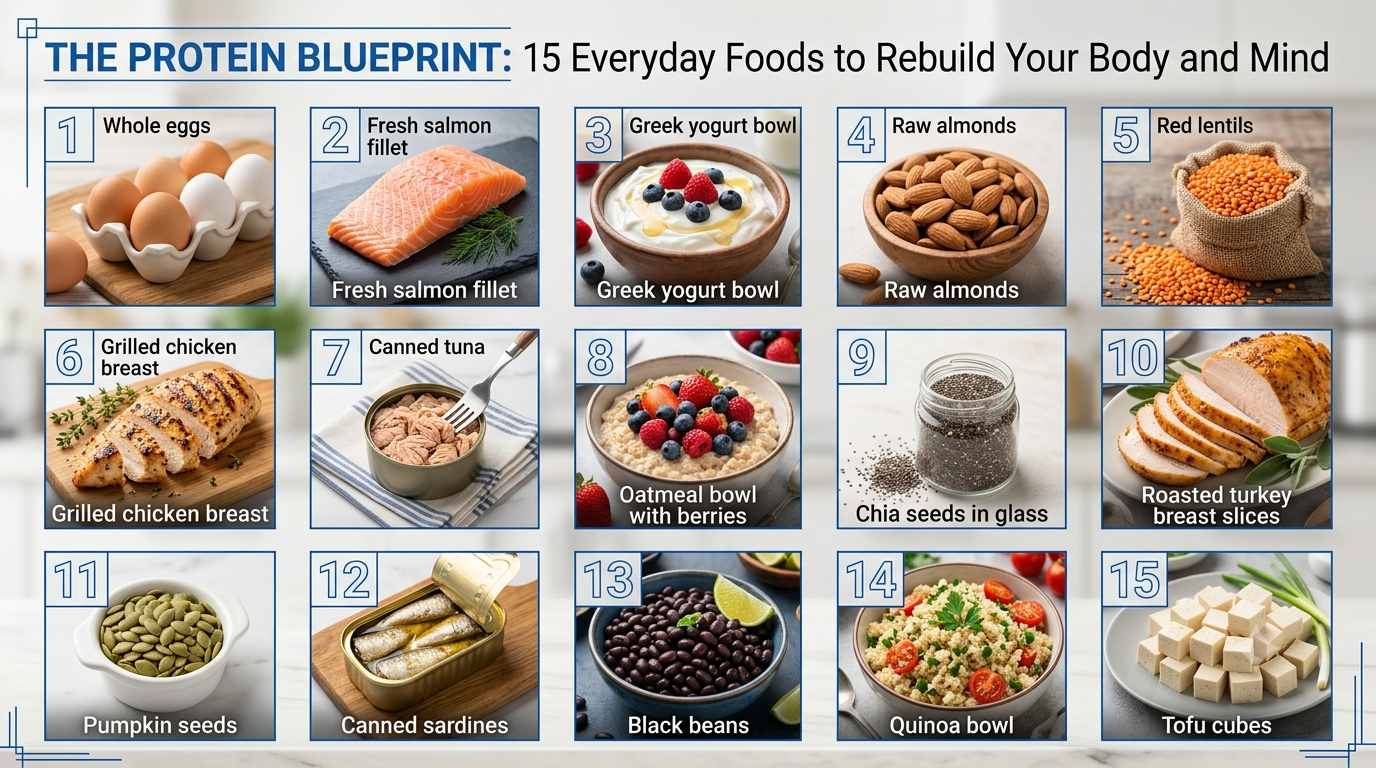
We live in a world that is constantly trying to tear us down. Stress, pollution, and the relentless pace of modern life chip away at our vitality. But what if the solution to rebuilding your resilience wasn’t found in a pharmacy, but in your kitchen? Protein is often relegated to the realm of “gym bros” and bodybuilders. This is a profound misunderstanding. Protein is not just for big muscles; it is the architect of your entire biology. It builds the enzymes that digest your food, the antibodies that fight off viruses, the collagen that keeps your skin supple, and the neurotransmitters that keep your mood stable. Yet, for many, the daily protein intake is a patchwork of rushed meals and processed snacks. We are, in a sense, starving for the very nutrient that holds us together. This guide is not just a list. It is a blueprint. We are going to explore 15 high-protein foods that are accessible, versatile, and delicious. We will dive into the science, the practicalities, and the art of weaving them into your daily ritual.
The Foundation: Why Protein is the Currency of Life
Before we dive into the pantry, let’s understand the “why.” Think of your body as a construction site. Calories (fats and carbs) are the fuel for the machinery, but protein is the brick and mortar. Without adequate protein, the body cannot repair muscle tissue, produce hormones, or maintain healthy hair and nails. Beyond the physical, protein is a key player in satiety. A high-protein breakfast doesn’t just taste good; it sends a signal to your brain that you are nourished, reducing the urge to snack on empty calories later in the day. It is the silent regulator of your metabolic health.
The 15 Pillars of High-Protein Nutrition
Let’s categorize these powerhouses. We’ll look at the animal kingdom, the plant world, and the dairy aisle. The goal is variety—not just for nutrient synthesis, but for the pure joy of eating.
Part 1: The Animal Kingdom (The Complete Packages)
Animal proteins are considered “complete” because they contain all nine essential amino acids that the human body cannot produce on its own.
1. Skinless Chicken Breast is the undisputed champion of lean protein. It is a blank canvas for flavor, absorbing whatever spices or marinades you introduce. It is incredibly versatile, working in salads, stir-fries, or simply grilled. The vibe is clean, efficient, and foundational. It delivers approximately 31 grams of protein per 100 grams.
2. Wild-Caught Salmon is not just protein; it is brain food. Rich in Omega-3 fatty acids, salmon fights inflammation while delivering a hefty protein punch. It is the beauty food of the sea, promoting glowing skin and a sharp mind. The vibe is luxurious, restorative, and anti-inflammatory. It provides approximately 25 grams of protein per 100 grams.
3. Eggs are the original superfood. For years, eggs were demonized for their cholesterol, but science has redeemed them. They are the gold standard for protein bioavailability—your body absorbs almost all of it. The yolk contains choline, essential for brain health. The vibe is humble, perfect, and breakfast-centric. Each large egg delivers approximately 6 grams of protein.
4. Lean Grass-Fed Beef may have its detractors, but grass-fed beef is a nutritional powerhouse. It boasts higher levels of conjugated linoleic acid (CLA) and antioxidants compared to grain-fed beef. It is rich in iron and zinc, making it ideal for energy levels. The vibe is grounding, strength-building, and hearty. It provides approximately 26 grams of protein per 100 grams.
5. Turkey Breast is often relegated to Thanksgiving, but turkey is a year-round staple for the health-conscious. It is incredibly lean and contains tryptophan, an amino acid that helps regulate mood and sleep. The vibe is light, sustainable, and comforting. It delivers approximately 30 grams of protein per 100 grams.
6. Tuna (Skipjack or Yellowfin) is the convenience king. Canned tuna is the ultimate pantry staple for those days when cooking is simply not an option. It is pure protein with very little fat. The vibe is quick, salty, and nostalgic. It provides approximately 25 grams of protein per 100 grams.
Part 2: The Plant Kingdom (The Fibrous Warriors)
Plant proteins are excellent for gut health and are packed with fiber and antioxidants. The key is variety—eating “complementary” proteins (like beans and rice) ensures you get a full amino acid profile.
7. Lentils are the backbone of many ancient civilizations for a reason. They are cheap, easy to cook, and packed with protein and iron. They are the definition of nutrient density. The vibe is earthy, grounding, and sustainable. Cooked lentils provide approximately 9 grams of protein per 100 grams.
8. Chickpeas (Garbanzo Beans) are a chameleon, starring in everything from hummus to roasted snacks. They offer a satisfying texture and a great hit of protein and fiber, keeping you full for hours. The vibe is creamy, versatile, and Mediterranean. Cooked chickpeas provide approximately 9 grams of protein per 100 grams.
9. Quinoa is technically a seed but eaten like a grain. It is one of the few plant sources of complete protein. It is gluten-free and acts as a perfect base for grain bowls. The vibe is ancient, fluffy, and modern. It provides approximately 14 grams of protein per 100 grams when raw.
10. Tofu and Tempeh represent soy in its most versatile forms. Soy is a controversial topic, but for the vast majority, it is a safe and effective protein source. Tempeh, being fermented, is particularly good for the gut biome. It has a nutty texture that absorbs marinades beautifully. The vibe is adaptable, dense, and savory. Tofu provides approximately 8 grams of protein per 100 grams, while tempeh provides around 19 grams.
11. Edamame are young soybeans and the perfect snack. Steamed and salted, they offer a tactile eating experience (popping them from the pod) and a great protein profile. The vibe is playful, fresh, and green. They provide approximately 11 grams of protein per 100 grams.
12. Hemp Seeds are nutritional overachievers. They contain edestin, a protein that is easily digestible and similar to the protein found in human blood plasma. They are perfect for sprinkling on yogurt or salads. The vibe is raw, potent, and subtle. They deliver approximately 31 grams of protein per 100 grams.
Part 3: The Dairy & Alternative Realm (The Creamy Connectors)
13. Greek Yogurt is different from regular yogurt because it is strained to remove whey, resulting in a thicker consistency and double the protein. It is rich in probiotics for gut health and casein, a slow-digesting protein perfect for bedtime. The vibe is creamy, indulgent, and gut-loving. It provides approximately 10 grams of protein per 100 grams.
14. Cottage Cheese is having a massive renaissance. Once seen as a “diet food” from the 80s, it is now recognized as a metabolic powerhouse. It is incredibly versatile—you can blend it into sauces or eat it savory with everything bagel seasoning. The vibe is retro, versatile, and filling. It provides approximately 11 grams of protein per 100 grams.
15. Whey Protein Isolate is a supplement, yes, but a tool nonetheless. For those who struggle to hit their protein goals through food alone, a high-quality whey isolate is a clean, fast-absorbing option. It is ideal post-workout. The vibe is clinical, efficient, and athletic. It provides approximately 90 grams of protein per 100 grams of powder.
The Data at a Glance: Protein Comparison Table
To visualize the power of these foods, here is a comparison of their protein density relative to calories.
| Food Item | Serving Size | Protein (g) | Calories | Protein per 100 Calories |
|---|---|---|---|---|
| Chicken Breast | 100g | 31g | 165 | 18.8g |
| Tuna (Canned) | 100g | 25g | 116 | 21.5g |
| Greek Yogurt (0%) | 100g | 10g | 59 | 16.9g |
| Lentils | 100g (cooked) | 9g | 116 | 7.8g |
| Tofu (Firm) | 100g | 8g | 76 | 10.5g |
| Eggs | 100g (2 eggs) | 13g | 155 | 8.4g |
| Quinoa | 100g (cooked) | 4.4g | 120 | 3.7g |
| Hemp Seeds | 100g | 31g | 553 | 5.6g |
| Whey Isolate | 30g scoop | 27g | 110 | 24.5g |
It is important to note that protein density is not the only metric for health. Fats and carbs in foods like salmon and hemp seeds provide essential nutrients, so don’t judge solely by the ratio.
The Art of Integration: How to Eat This Way
Knowing the foods is one thing; eating them is another. You don’t need to eat chicken and broccoli five times a day. The key is stacking your protein intake throughout the day. For breakfast, start with 30 grams by trying Greek yogurt with hemp seeds and berries, or three eggs with a side of turkey. At lunch, aim for a palm-sized portion of protein, such as a tuna salad or a lentil bowl with feta. For dinner, make it the anchor meal with salmon and quinoa, or a lean beef stir-fry with tofu. For snacks, reach for edamame, cottage cheese, or a protein shake. This rhythmic approach to eating ensures your body has a steady supply of amino acids without overwhelming your digestive system at any single meal.
Frequently Asked Questions (FAQs)
How much protein do I actually need? The RDA (Recommended Dietary Allowance) is 0.8 grams per kilogram of body weight to prevent deficiency. However, for optimal health, satiety, and muscle maintenance, many experts recommend 1.2 grams to 1.6 grams per kilogram for sedentary adults, and up to 2.0 grams per kilogram for active individuals.
Is too much protein bad for my kidneys? For healthy individuals, high protein diets are generally safe. The “kidney damage” myth stems from studies on people with pre-existing kidney disease. If you have healthy kidneys, they are designed to handle protein efficiently.
Can I get enough protein on a vegan diet? Absolutely. You must be intentional. Focus on soy products like tofu, tempeh, and edamame, as well as legumes, seitan, and quinoa. You don’t need to combine specific amino acids at every meal; just ensure you eat a variety of plant proteins throughout the day.
What is the difference between Whey and Casein? Whey is fast-digesting, ideal for post-workout recovery. Casein is slow-digesting, forming a gel in the stomach, making it ideal before bed to prevent muscle breakdown during sleep.
Does cooking method affect protein content? It doesn’t change the amount of protein, but it changes the calorie density. Frying adds fat calories; grilling, baking, or steaming keeps the protein lean.
Helpful Websites & Resources
To continue your journey, here are some reliable resources. Examine.com is the gold standard for unbiased, science-based analysis of supplements and nutrition. USDA FoodData Central is the official database for looking up the exact macronutrient profile of any food. Harvard T.H. Chan School of Public Health (The Nutrition Source) is excellent for understanding the broader context of diet and disease prevention. Precision Nutrition offers great infographics and practical coaching advice for habit change.
Conclusion: The Protein Renaissance
We are moving past the era of fad diets and into an era of biological literacy. Understanding protein is understanding how to repair your body, stabilize your mood, and fuel your life. You don’t need to be a bodybuilder to care about protein. You just need to be a human being who wants to feel strong, capable, and vibrant. Whether you choose a sirloin steak or a bowl of lentils, the act of prioritizing protein is an act of self-respect. Start small. Add an egg to your breakfast. Swap the chips for edamame. Watch how your body responds. It is never too late to rebuild the blueprint. Eat well, live strong.
Imp. Note: This article is for informational purposes only and does not constitute medical advice. Always consult with a qualified healthcare professional before starting, stopping, or changing any medication.